
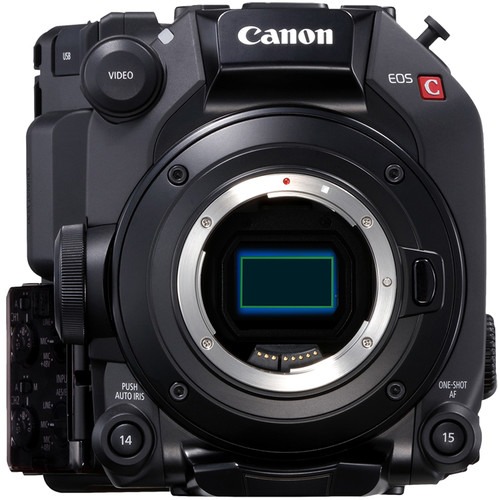
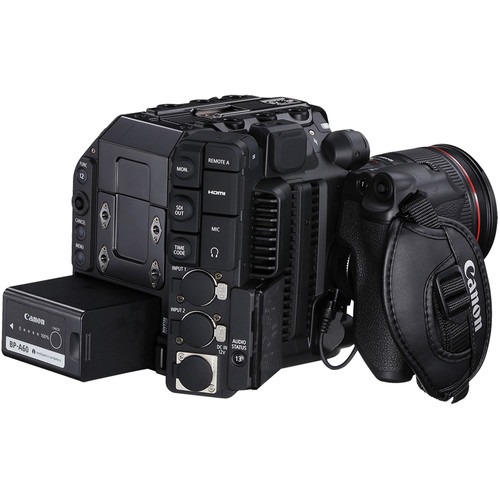
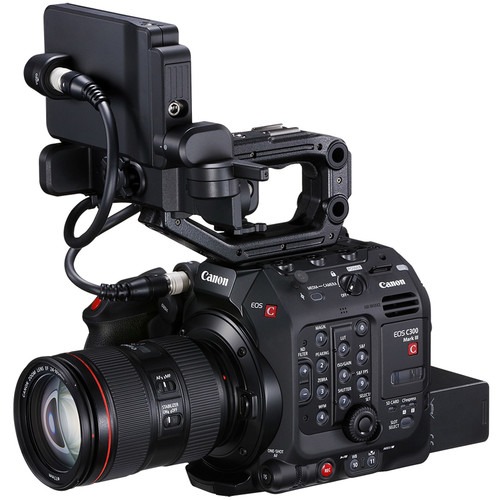
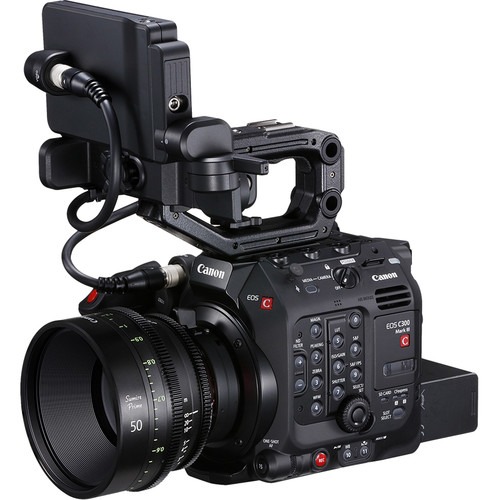
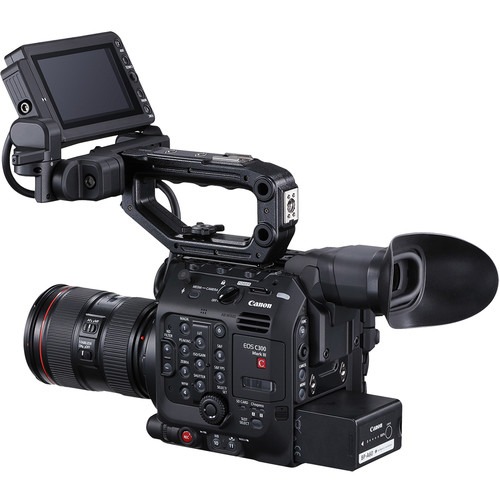

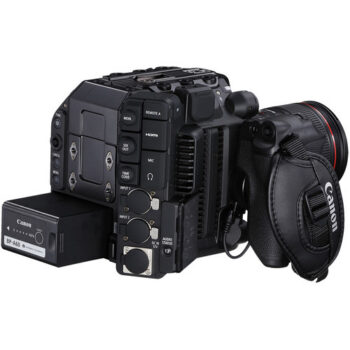
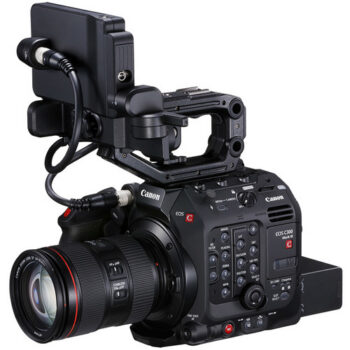
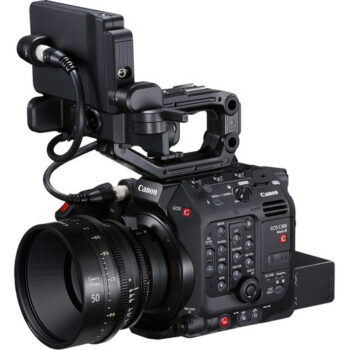

Create cinema-quality productions with the Canon EOS C300 Mark III Digital Cinema Camera, which features a Super 35mm Dual Gain Output sensor with up to 16 stops of high dynamic range capability for superior HDR recording and low noise. The EF lens mount offers compatibility not only with Canon’s existing broad range of DSLR lenses but also with their line of EF-mount cinema prime, zooms, and even 2.0 and 1.33 anamorphic lenses. The mount is also interchangeable with a separately available PL mount by the end user.
Canon Log 2 provides the largest dynamic range and image detail. While Canon Log 2 provides the most post-production flexibility and full dynamic range of the sensor, it typically requires more time in color correction.
For users looking for most of the benefits of Log workflow, but with shorter turnaround times, Canon Log 3 provides an alternative with only a slightly reduced dynamic range of 14 stops.
In addition to the conventional Intra-based XF-AVC codecs, a 4:2:2 10-bit Long GOP-based codec has been added with consideration for a balance of quality and data rates. This new Long GOP-based codec has a data rate that is less than half that of the conventional Intra codecs. This new lightweight codec makes it easier for users to reduce media costs and work with cloud-based infrastructures.
The EOS C300 Mark III Digital Cinema Camera incorporates the new Canon XF-AVC codec that allows 4K and 2K image data to be recorded internally onto CFexpress cards in workflow-efficient file sizes using advanced video compression. Using the XF-AVC codec, the EOS C300 Mark III can record a variety of frame fates up to 4K 120 fps and 2K up to 180 fps.
Canon’s powerful high-speed DIGIC DV7 image processor makes it possible for the EOS C300 Mark III to simultaneously record 2K Proxy files. Cinema RAW Light can be recorded to the internal CFexpress card, while an XF-AVC 2K 4:2:0 8-bit proxy can be recorded directly to an internal SD card. The C300 Mark III can also apply LUTs to Proxy recording.


